Spider Star
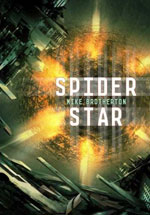
The human colony on the planet Argo has long explored and exploited the technology left behind by an extinct alien race. But then an archaeology team accidentally activates a terrible weapon...
Read More.Praise for Star Dragon
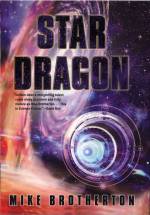
"Seldom does a storytelling talent come along as potent and fully mature as Mike Brotherton. His complex characters take you on a voyage that is both fiercely credible and astonishingly imaginative. This is Science Fiction."
-- David Brin"Star Dragon is terrific fare, offering readers a fusion of hard science and grand adventure."
-- Locus Magazine"Star Dragon is steeped in cosmology, the physics of interstellar travel, exobiology, artificial intelligence, bioscience. Brotherton, author of many scientific articles in refereed journals, has written a dramatic, provocative, utterly convincing hard science sf novel that includes an ironic twist that fans will love."
-- Booklist starred review"Readers hungry for the thought-provoking extrapolation and rigorous technical detail of old-fashioned hard SF are sure to enjoy astronomer Brotherton's first novel."
-- Publishers Weekly"Mike Brotherton, himself a trained astrophysicist, combines the technical acuity and ingenuity of Robert Forward with the ironic, postmodern stance and style of M. John Harrison. In this, his debut novel, those twin talents unite to produce a work that is involving on any number of levels. It's just about all you could ask for in a hardcore SF adventure."
-- Paul di Fillippo, SCI-FI.COM
Search
Five qualities required to be a Scientist…
November 5th, 2007
Here’s one site about becoming a scientist: Cool Careers in Science
What does it take to become a professional scientist? To get into graduate school, persevere, collect a PhD and land a job in the field?
A lot of things, but not all obvious to the uninitiated.
I used to like to tell people that it took three qualities, two of which might not be obvious. I now think it takes five.
First, it takes brain power. Intelligence. Talent. The ability to do the hard work.
This is probably obvious to most, but is sometimes ignored when people want to put down a scientist reporting results they don’t like. Every scientist has some native intelligence above and beyond that of the general population. Perhaps not a lot more, but above average. Scientists get not only through college, but into graduate school and through it. Few graduate programs let in students with GPAs below 3.0, which is pretty good at colleges other than Princeton or Harvard.
Now, I will admit that there are plenty of gradations of intelligence above average, and that there are some stupid smart people and some smart stupid people, but that’s the subject of another, future post. PhD-level scientists are all smart, but plenty fall way short of genius level and fail to apply their brains to every problem before them.
OK, second: stick-to-itivness. You don’t get a PhD for pointing out small things. You have to show that you can produce a significant step in our understanding of the universe, and that requires many months to years of sustained effort to complete. Usually at least three years. If you can’t start, sustain, and finish a project that takes longer than a year, forget about being a scientist. There are plenty of smart people, including geniuses, who can’t be scientists because they’re flighty, lazy dilettantes. We all know them, and most of them make me shake my head. I’ve had a couple of promising, smart students who will never make it for this weakness. They make good points, have good criticisms, but never produce anything of their own all that worthwhile.
Third item: communication skills. Maybe it’s possible to be a scientist without good communication skills, but, oh, wow…how will the career suffer. Scientists must write papers, proposals, and give talks. Referee papers. Review proposals and papers. The ones who can’t communicate clearly and effectively will not get their work considered seriously and will have poor careers, assuming they can even get through writing a thesis and defending it successfully. Staying in science without being able to secure funding is tough. Very tough.
That was my original list, but I finally decided that I had to add two other items.
Curiosity and attention to detail.
Curiosity is what drives any decent scientist. Having a PhD and securing a permanent position means having independence to pursue a line of research. That requires curiosity. Grad students who blow away the GRE but need to be told what to do every step do not make good scientists. They’re technicians at best, which is fine, but a different career. Scientists are curious and need that to do research. There is a scientific method, but there’s no algorithm to how to develop and test the next hypothesis. It does require that spark.
Finally, attention to detail. This was something I was never great about growing up and had to learn myself. It’s amazing how many details must be addressed in bringing a research project to publication. Ideally every journal article describes every project in enough detail to duplicate it. That’s a big responsibility, and anyone who can’t be bothered to get those details right nearly all the time or better can’t be a good scientist. Mistakes are always going to happen, but they shouldn’t be too common. And sometimes in science, the results and their interpretation turn on those details as they do in few other fields.
Summarizing, every would-be scientist needs:
1. Raw brain power
2. Dedication to finish long-term projects
3. Communication skills (writing, speaking)
4. Curiosity
5. Attention to detail
There’s no crime in not becoming a scientist. Not every smart person has these qualities. And there are plenty of smart people who aren’t geniuses who make great scientists. As a professor mentoring students, I see some of the brightest fail on some of these points every year, and others less gifted succeed on their other strengths.
Another day I’ll rant about the stupid smart people who are the bane of the system all too often…

You can follow any responses to this entry through the RSS 2.0 feed. You can skip to the end and leave a response. Pinging is currently not allowed.
thanxs, very good post, im 12 years old and i am looking to be a physicist i am studying at home and working hard at school, but my school is to easy for my standerds, do i still have a chance to follow my drean???
If school is too easy, and it was sometimes for me, too, understand that school does not limit you. There are books and video courses online for free that you can investigate on your own. If you learn your subject well, it will be shown on standardized exams and that will be the important thing, not what school you went to.
I th’nk that to b’cm a great scintist u sh’ld think on u never thought or anyone never thought ever in this world…..n proceeding this way u’ll be huge scintist that never can be even newton or einstien
I m nt a scintest bt my th’nk’ng is,”I th’nk that to b’cm a great scintest u sh’ld think on u never thought or anyone never thought ever in this world…..n proceeding this way u’ll be huge scintist that never can be even newton or einstien”
I assume that what is that brought us all here is the Dream of making fame, accomplishing something very brighting. Then we’re confused either we’re capable of making it come true or we’re just wasting our precious time. But, The idea of letting go is frightening. However, for those who have nothing to lose.. Keep on the hard work
Good luck
i am a student of class ten i want to be an scientist but when i sit on my study table i get boor plese tell me pleas tell me a way to study and i also try all way to study plise tell me a different way to study somthing different somthing intersting
hi, my story is quit diffrent from other im in 12th std nd im not so gud in study but i luv science nd technology nd i wish to do some thing diffrent in this field nd i just want one chance to prove my self
I LOVE SCINCE I M AN AVREAGE STUDENT IN SECOND YEAR BUT I M FOND OF SCIENCE I M NOT SO INTELLEGENT BUT I DESIRE TO WORK FOR HUMMANITY NOT FOR A COUNTRY
TRUTH ABOUT SCIENCE
IS SERCH OF GOD
who do i know my IQ quality
Please provide me the ways to become a great scientist…..I am too much interested in Science and Mathematics…….I wanna be a scientist like Dr. APJ Abdul Kalam…
Hi i want to tell all of you that for be a scientist only thing is need that is tdon’t think about what people think about you just do what you want to do and if you study anything then you have to know what is that and what is use of it.(CURIOUSITY)
Hi i want to tell all of you that for be a scientist only thing is need that is don’t think about what people think about you just do what you want to do and if you study anything then you have to know what is that and what is use of it.(CURIOUSITY)
Hi i want to tell all of you that for be a scientist only thing is need that is don’t think about what people think about you just do what you want to do and if you study anything then you have to know what is that and what is use of it.(CURIOUSITY).
martha , it is not a problem. I am also a weak student but wanted to be a scientist . Science does not want a brain with a high IQ but a brain full of questions.
sir, i like ur listed things to be s scientist.But sir can a person after completing engineering apply for it?
I have qualities better grades ,curosity, not too much communication skills but for to a scientist I will develop it.
Why not? My undergraduate degree is officially in engineering.
for that how should I start preparing.
i know there is no god and nothing,there is only science. can any body give opportunity for science job, i have very raw brain, i always think about science..
i am i diplamo in ece branch i am average student in studies but i am idiolagy that changes world i have intrust in computers and microprocessors so plz help me what can i do**
i want work in nasa
i want to work in nasa
I’ve a dream about being a scientists one day. And hey my IQ turned out to be 160 it’s nothing.But I promised myself that I’ll be one just one day and I’m not letting myself down I want to invent things that will save life and stop deaths and I’ll do that idc what other people think
I’m in grade 8, I have an IQ of 160,and this report card that we got, well this term I couldn’t study a lot because of certain things and I ended up with a 83% average. I guess I’m not that smart then, the people who got the highest marks got an 87% average ( they studied for tests though ). I always wanted to be a climatologist ever since I was in kindergarten, I read non-fiction books on weather, and animals. .etc. I guess I wont be able to make it now with the average that I have. ( my geography, gym,art and music mark pulled it down
:(. )
I’m in grade 8, I have an IQ of 160,and this report card that we got, well this term I couldn’t study a lot because of “things” and I ended up with a 83% average. I guess I’m not that smart then, the people who got the highest marks got an 87% average ( they studied for tests though ). I always wanted to be a climatologist ever since I was in kindergarten. I guess I wont be able to make it .
where we find coaching for student in class8 in agra only in less amount of fees amount should be in 500Rs per month approx.
cool!!
nice
I’m in middle school in 8th grade and I love science ever since I was a small child . when I started middle school I had honors science and I’d always been the teachers pet ( in other words ,best student ). And I’d love to be a scientist that archives big things to create a better world , and your words helped a lot and got me thinking more and more ……. Thank you because of you I’ve gotten more courage to follow my dreams and I know I can do it .
I was recommended this blog by my cousin. I am not sure whether this post is written by him as nobody else know such detailed about my problem.
You’re wonderful! Thanks!
I am 16 year old but im nuclear astrophysicist & neurorobotics biotechnologist at age of 16 I complete p.hd of quantum physics ; medical series. My iq test is 129 now.
And what about me i also want to be a scientist i also qualities like telent curiocity but not communication skill well i can’t able to exppress my ideas my self now at in BE ELECTRICAL can i complet my aim and also say to me what can i do or what can the gornvment help to me
I think to be a scientist, you should have the absolute knowledge about everything around you & curiosity to increase it. & and also the courage to anything for science.
Intelligence is probably not the least important thing of these five qualities. Curiosity, passion, integrity, determination, these things will get you far. Intelligence will get you further. Communication skills will get you even further.
I wish to be come a enginer and run a auto shop Biz when i get older im in grade 8 but im not doing very whell i had to do a essay and the topic i picked was “qualities of a good physisist, this really helped thx))
I Have Read And Understood Well.But I Want To Know Onething,as My Students Say,they Well Understand When Teaching But They Fail To Apply That Knowledge To The Exams Questions.So How Should I Help Them? I Am A Degree Physics And Mathematics Teacher.
i em reley shupid butt i luv siense
You must be smart and be gentle when mixing the potions and other stuff
I want to become a great scientist.
can I be the assistant of a scientist after passing plus two